


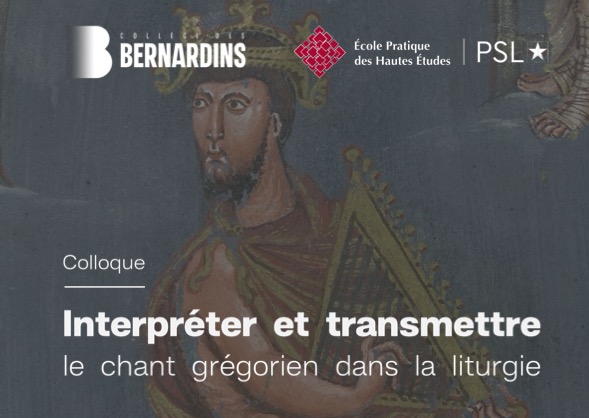
Late November 2025 brought the Gregorian chant community together in Paris for complementary academic and practical events (November 26–30), showcasing how REPERTORIUM’s digital humanities work directly informs living musical practice.
REPERTORIUM Research Takes Center Stage
At the EPHE-PSL and Collège des Bernardins conference “Interpreting and Transmitting Gregorian Chant in the Liturgy” (26–28 November), REPERTORIUM team member Dominique Crochu presented breakthrough research on the SI (B-flat/B-natural) problem in Gregorian chant—a long-standing challenge in modal theory and editorial practice.
Crochu’s presentation demonstrated how REPERTORIUM’s systematic comparison of adiastematic and staff notation traditions enables:
- Distinguishing modal necessity from scribal habit in SI mutations
- Improved understanding of liturgical syntax choices
- New pathways for reevaluating modern editions and chanter training
This work, drawing on REPERTORIUM’s comprehensive approach to medieval musical sources, was recognized as a significant advancement in Gregorian modal studies.
From Digital Research to Living Practice
The following Rencontres Grégoriennes (29–30 November) brought 150+ participants together for workshops and liturgical celebrations. Conference insights—including the SI research—found immediate practical application in modality workshops and Advent repertoire sessions.
These events exemplify REPERTORIUM’s core mission: recovering medieval musical heritage through rigorous digital methods while maintaining vital connections to contemporary performance and liturgical life. The week demonstrated how cutting-edge digital humanities research directly enriches living sacred music traditions.
Click here and learn more on the above events and outcomes.